
Running a Sex Offender Check in Orange County
The official public starting point is the California Megan's Law Website. It draws from the California Sex Offender Registry maintained by the California Department of Justice. Orange County does not operate a separate public registry. Local police departments and the Orange County Sheriff's Department register people within their jurisdictions, verify required updates, and send that information to DOJ. The state website then provides the public view allowed by California law. That division of work matters: use the state site to search, but contact the local registering agency or DOJ when a fact appears wrong.
Begin with more than a name when possible. An approximate age, photo, middle name, city, or ZIP Code can help distinguish people with similar names. Read the disclaimer before searching. DOJ warns that listings can change fast, some registrants are excluded from public display, and mistaken identity is possible. A match should therefore be treated as a safety lead to verify, not as license to confront anyone. For a wider overview of local record channels, the Orange County criminal history resource explains how agency and court records differ.
Orange County SONAR Registration Work
The OCSD Sexual Offender Notification and Registration team, known as SONAR, works within the Special Victims Detail. Its mission includes identifying and locating registered sex offenders who live in sheriff jurisdiction, maintaining records, and contacting those registrants. Residents of cities with their own police departments generally register with that local agency instead. This means the agency that accepts an update depends on the actual law enforcement jurisdiction, not merely on an Orange County mailing address.
OCSD lists Sex Offender and Arson Registration at (714) 834-6454, Monday through Friday from 8:00 a.m. to 3:00 p.m. Irvine Police handles its own registration by appointment at (949) 724-7251. The local agency collects required facts and forwards them to DOJ. DOJ says it updates Megan's Law daily from local reports. If a profile has an error, DOJ directs the public to contact a police or sheriff's department or email MegansLaw@doj.ca.gov.
OCSD's SONAR page is shown in the captured reference below.
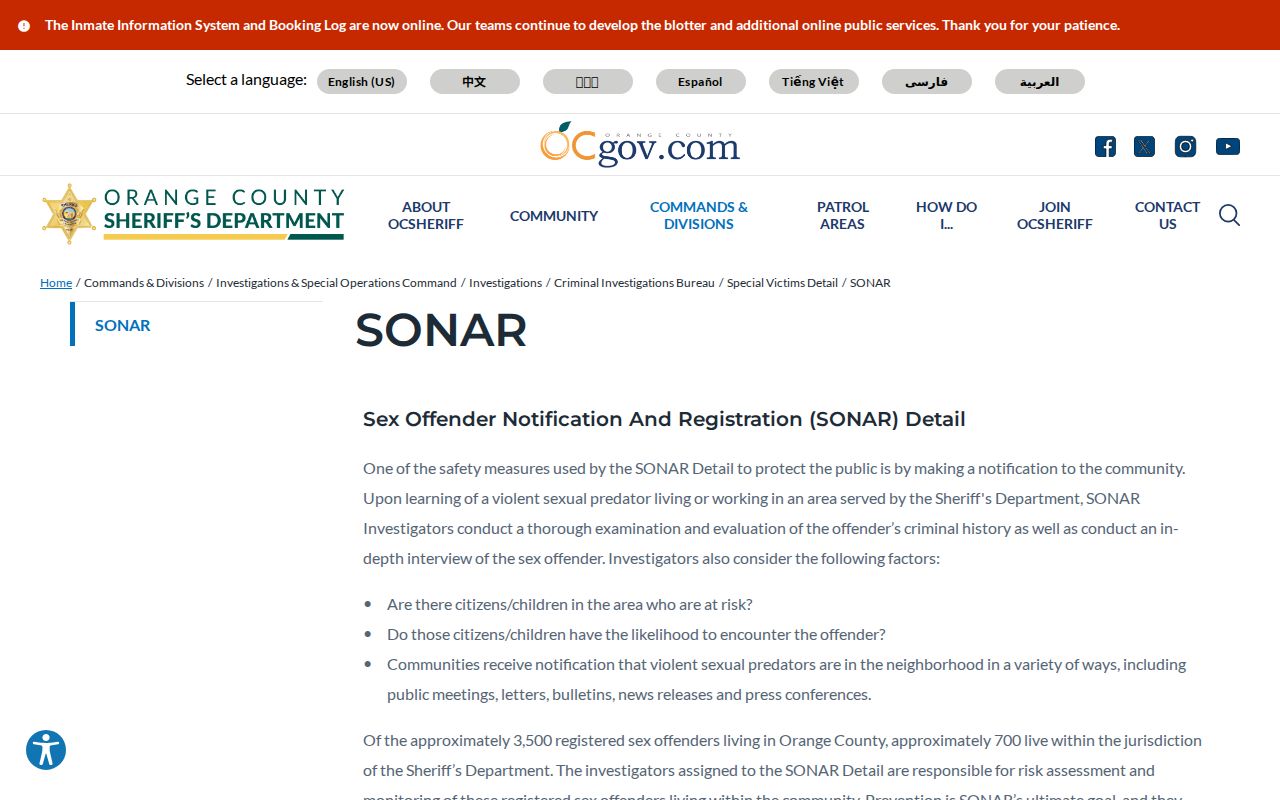
The local page points residents back to California Megan's Law for the public search while explaining the sheriff's enforcement and registration role.
Searching the California Megan's Law Website
California Megan's Law offers name and geographic search routes. A county filter can narrow results to Orange County, while city, ZIP Code, address, and map controls support a more local view. Search results are informational rather than a substitute for direct confirmation. Work slowly through the identity details and posting category because the site may show a full address, a city or ZIP-level location, a conditional address, or no public location at all.
- Open the official registry and read and accept its conditions of use.
- Choose a name search or narrow the map by address, city, ZIP Code, or Orange County.
- Compare the result list with known identifiers, especially the photograph and physical description.
- Open the profile and review the offense, location category, registration status, and update warning.
| Field Label | Type | Required | Notes |
|---|---|---|---|
| Disclaimer agreement | Checkbox or button | Yes | Acceptance is required before entering the search. |
| Name | Text | No | Use an offender name when known. |
| City or ZIP Code | Text or selection | No | Narrows a community search. |
| County | Selection | No | Select Orange County for countywide results. |
| Address and radius | Map control | No | Supports geographic review near a location. |
Megan's Law and NSOPW Compared
The California site is the strongest source for an Orange County sex offender check because it displays information under California's own disclosure law and receives local agency updates. The Dru Sjodin National Sex Offender Public Website adds a cross-state layer. NSOPW is useful when a search concerns travel, a recent move, or an uncertain state connection. Its results still depend on the participating jurisdictions that supply them.
Use both tools for different jobs. Start with Megan's Law for Orange County geography, California posting rules, and local profile detail. Use NSOPW to extend the same search beyond California. Neither tool proves that two similar names identify the same person. Compare photographs, physical traits, aliases, and known locations before relying on any result.
The national search layer appears in this NSOPW reference image.
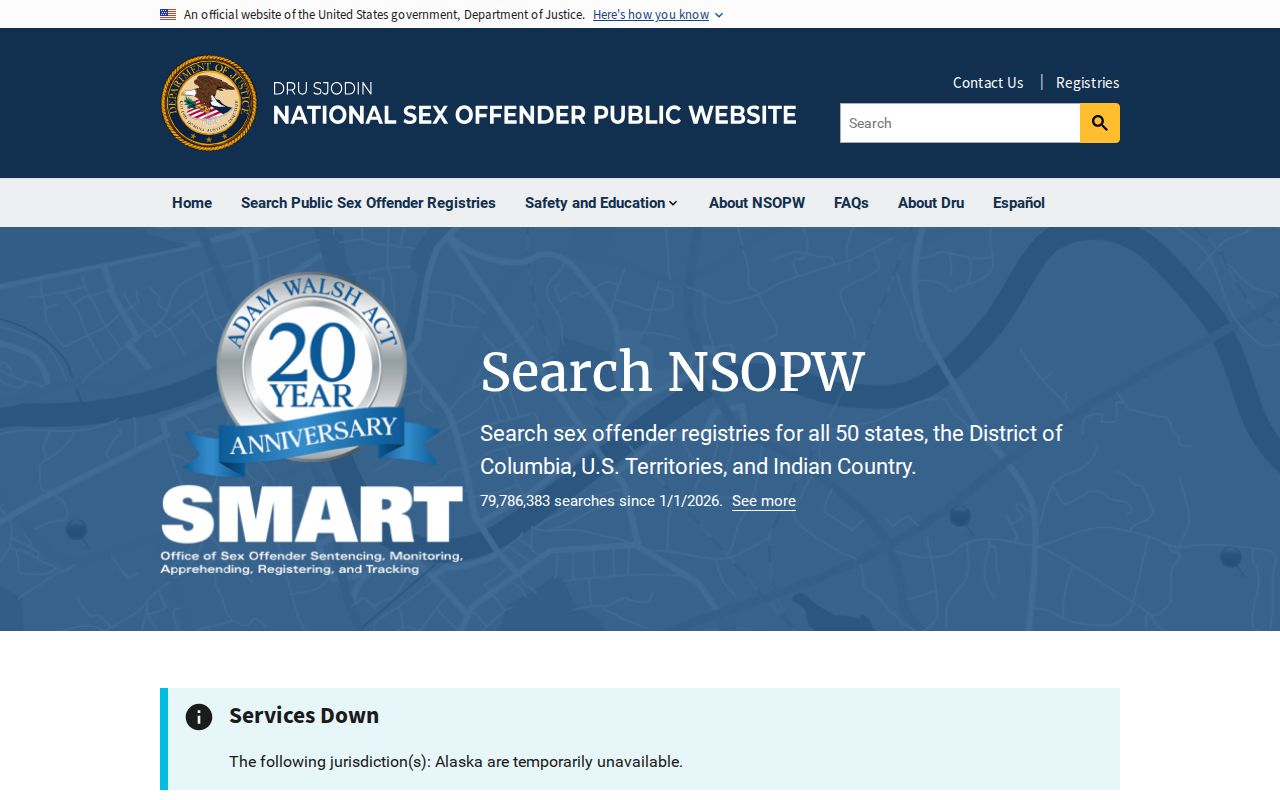
That national route complements, but does not replace, the California Department of Justice registry for Orange County detail.
What a Registry Profile Shows
A public profile may include identifying facts, a photograph, the offense that requires registration, and a location category. DOJ states that only the qualifying registration offense may be disclosed. Other criminal history should not be inferred from the profile. Some fields depend on the person and the disclosure rules, so vehicle information, school data, risk assessment details, scars, marks, or tattoos may not appear in every result.
| Name & Aliases | Public identity names used to help distinguish the listed person. |
|---|---|
| Photo & Physical Description | A public photo and traits that can reduce mistaken matches. |
| Registered Address | May be a full address, conditional address, or city, ZIP, and county level location. |
| Offense & Statute | The offense or offenses that require registration, not a full criminal record. |
| Risk Information | Risk assessment information where California law permits it to appear. |
| Registration Status | The profile may state when update duties are in violation. |
Orange County Address Posting Categories
A missing street address does not mean the search failed. Penal Code section 290.46 creates different public disclosure categories. Depending on the applicable rule, a profile can show a full home address, a conditional home address, a ZIP Code with city and county, or no public listing. DOJ also warns that some registrants are not disclosed on the public website at all. These limits are part of California law rather than evidence that local police skipped registration.
When an Orange County result shows only broad geography, do not guess at a residence or map the person to a nearby home. Use only the location that DOJ publishes. If the goal is personal safety near a specific address, use the site's authorized geographic search and review the disclaimer. A profile's category can also change as facts or legal status change.
California Penal Code section 290.46 sets the disclosure and misuse rules pictured here.
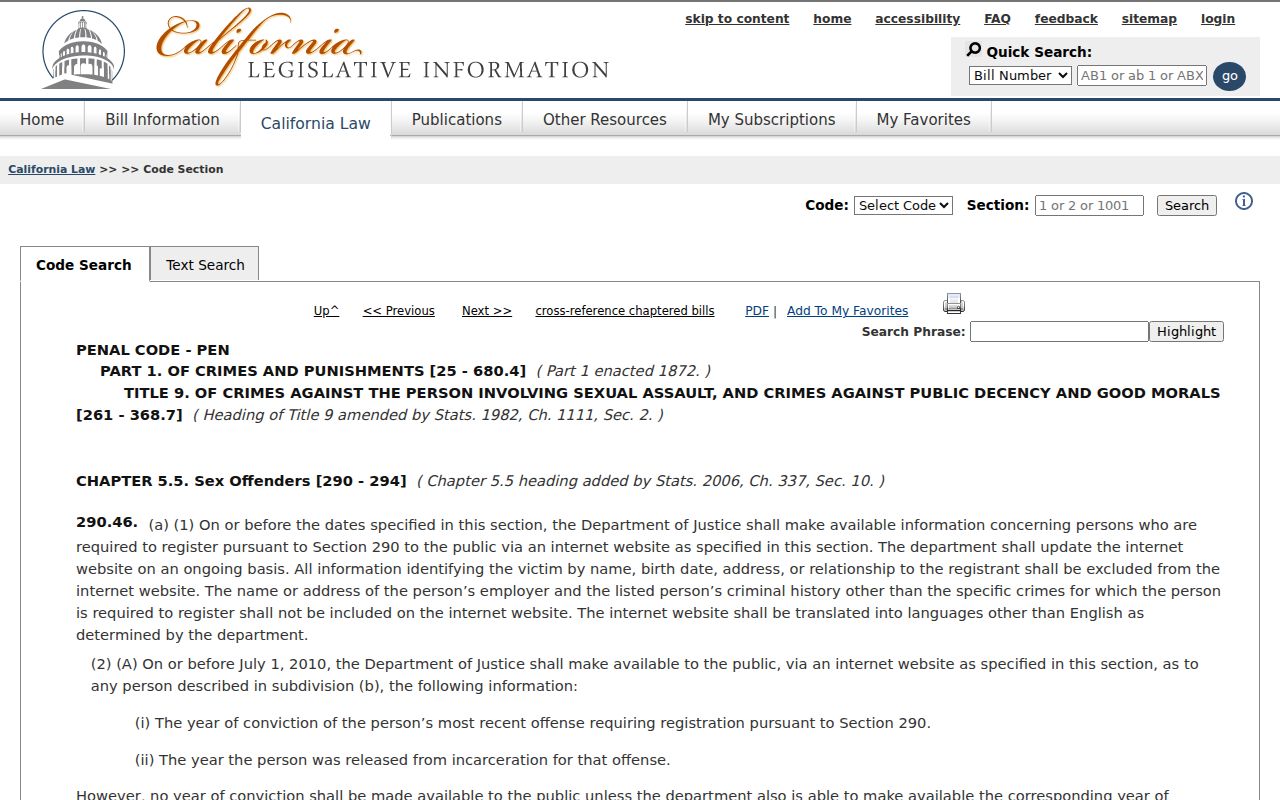
The statute explains why Orange County profiles do not all disclose the same degree of location detail.
Registration Requirements and Levels in California
California's SB 384 framework uses adult minimum periods of 10 years, 20 years, and life. Reaching a minimum period does not automatically end every duty. An eligible registrant may have to petition the court, and the legal criteria still control the result. Registration updates also run on schedules that are distinct from tier duration. Most registrants complete an annual update around their birthday, while transients and sexually violent predators face more frequent updates.
| Level / Tier | Adult Minimum Period | Update Rule |
|---|---|---|
| Tier 1 | 10 years | Annual update generally applies; other status-based rules can add duties. |
| Tier 2 | 20 years | Annual update generally applies; petition eligibility follows the statute. |
| Tier 3 | Life | Annual update generally applies, with added schedules for certain statuses. |
Orange County Registration Deadlines
A person subject to California registration generally must register with the law enforcement agency that has jurisdiction over the residence within five working days after release into the community. The annual update falls within five working days before or after the registrant's birthday. A change of residence, or a change to transient status, also must be reported within five working days. Transient registrants update every 30 days. Sexually violent predators update every 90 days.
These deadlines explain why a public profile can change soon after a move. The local agency takes the update and forwards it to DOJ, which says Megan's Law is updated daily from those reports. A late or missing update may result in a violation notation, but the public should report a concern to law enforcement rather than attempt its own investigation.
DOJ's summary of California registration duties is captured below.
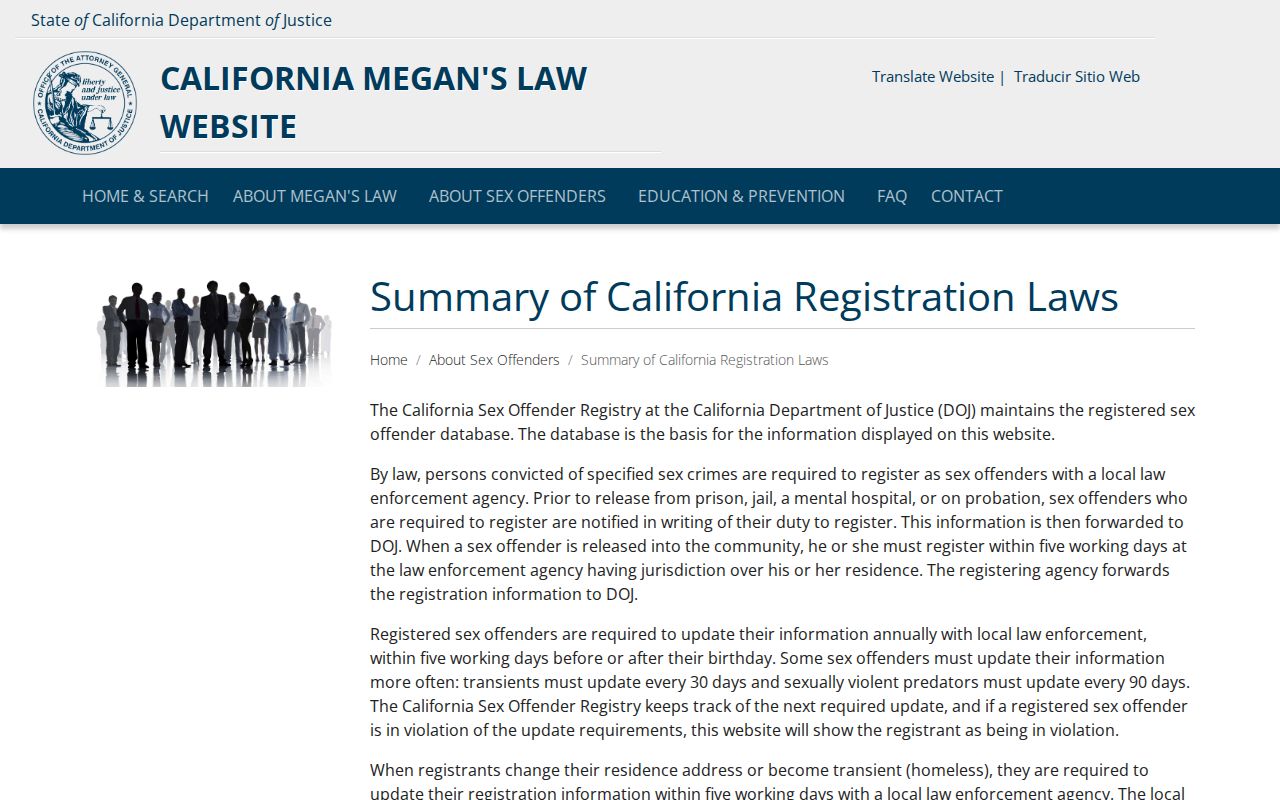
The state summary connects local registration visits with the update cycle shown on the public registry.
Orange County Tier Petitions
The end of a minimum registration period is a legal process, not a simple profile edit. The OCSD SB 384 page explains the 10-year, 20-year, and lifetime adult tiers and the petition framework. An eligible person may petition Orange County Superior Court after completing the applicable minimum period. The court process determines whether registration ends. Until relief is granted and processed, the existing duty remains in force.
For a member of the public, this helps explain why two profiles with old offenses may have different statuses. Tier assignment, eligibility, required time, and court action can differ. Registry users should read the displayed status rather than assume an old date means the duty expired.
The sheriff's SB 384 reference is shown below.
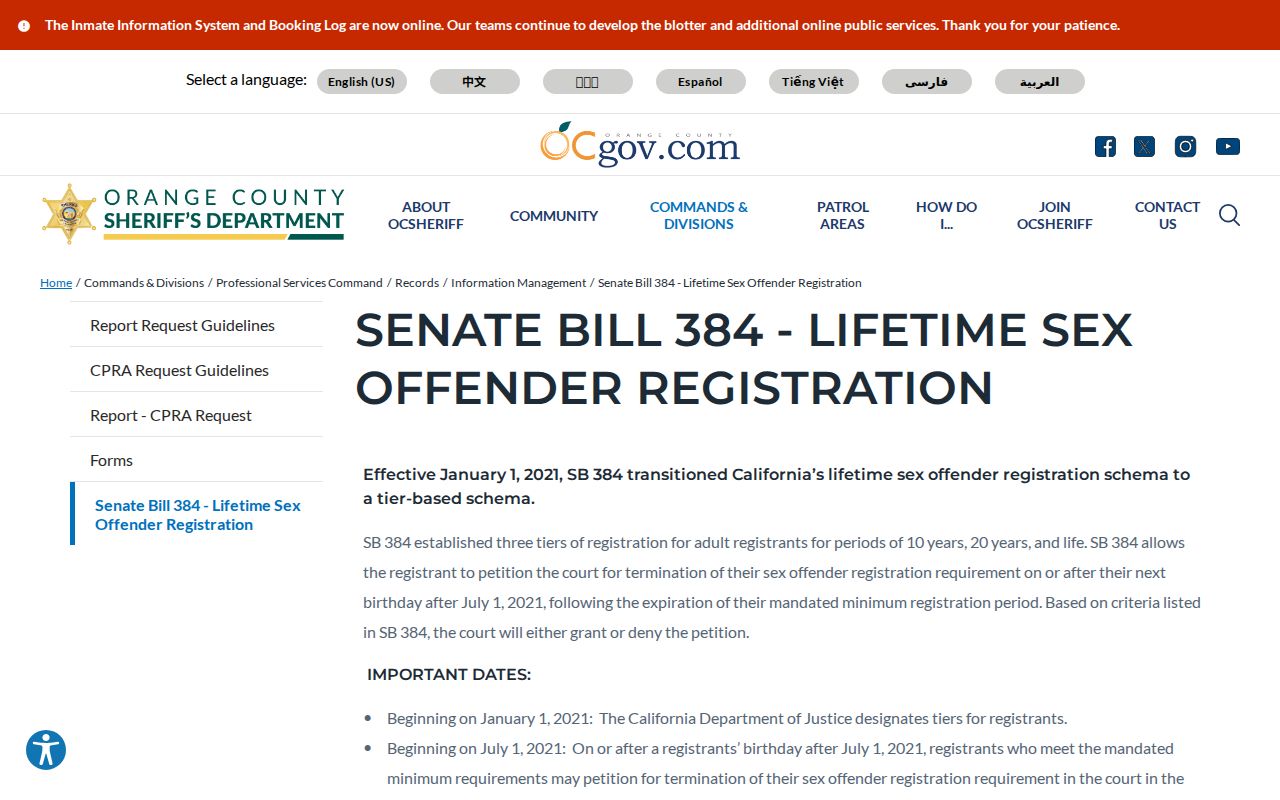
The local explanation gives Orange County residents a direct route to the current tier and petition framework.
Lawful Use and Community Notification
Registry information is meant for protecting a person at risk and for informed community safety planning. It can help a family review an area, understand a public notification, or decide what questions to ask local law enforcement. It must not become a tool for threats, intimidation, public shaming, or action against a registrant's family. DOJ expressly warns that data can be incomplete, can change quickly, and can be linked to the wrong person by a careless searcher.
Misuse is unlawful: Penal Code section 290.46(j) permits criminal prosecution and civil liability when registry information is used to commit a crime or harass a registrant or family.
Report suspected noncompliance to the police department or sheriff with jurisdiction. Do not confront the listed person. DOJ also warns that registrants who enter the site's search function can face penalties under Penal Code section 290.46(i). Those rules protect both public access and safe use.
The California DOJ Megan's Law overview provides the state context shown here.
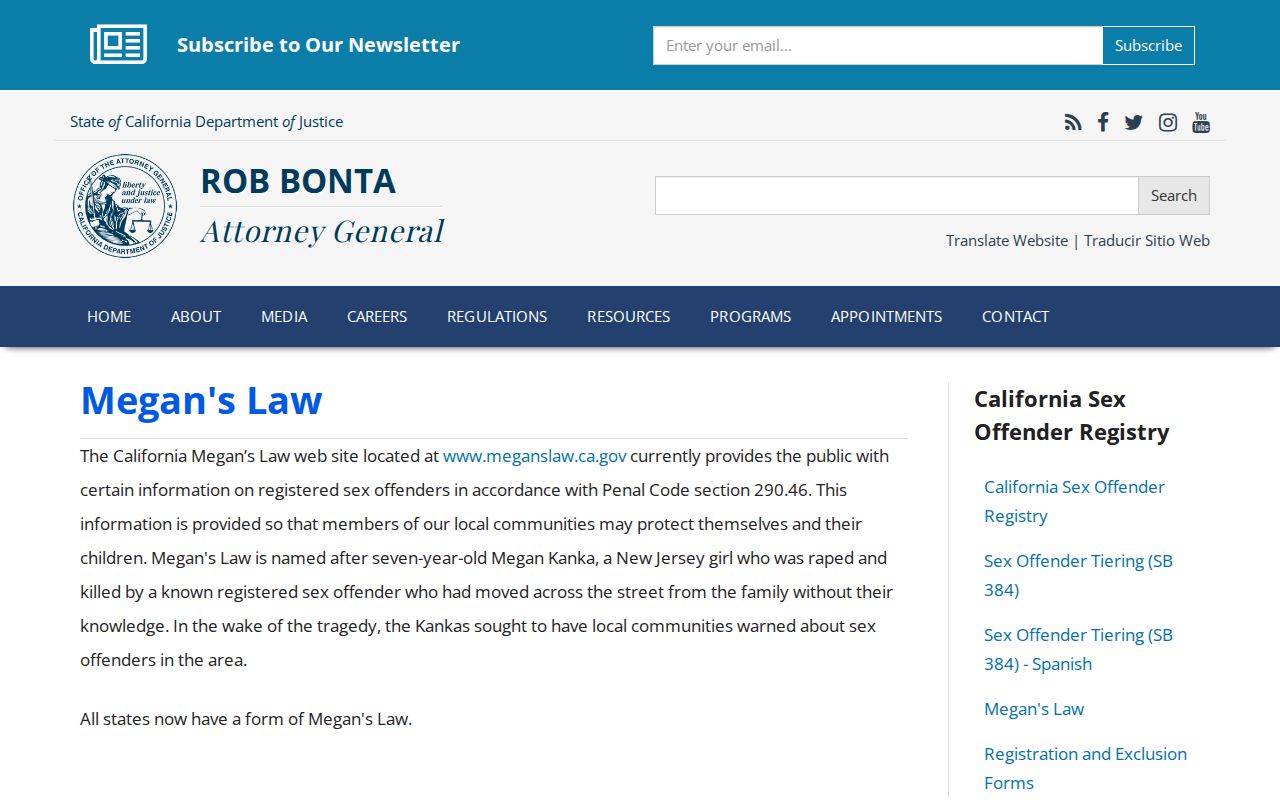
The DOJ overview reinforces that the registry is an official public safety source governed by strict limits on use.